catalog, monograph / May 2009
Council of Europe Art Collection (Strasbourg, 2009)
Transcript and record text
DOCUMENT DOWNLOAD
- Download selected pages (intro, Vasko Lipovac, impressum – PDF)
- Download complete publication (63 pages, 6.8 MB – PDF)
SUMMARY
Official bilingual (French–English) representative monograph publication Council of Europe Art Collection / Collection d’art du Conseil de l’Europe, published in Strasbourg in May 2009 on the occasion of the 60th anniversary of the Council of Europe. The book presents a curated selection of prominent artworks in the buildings and grounds of the Palais de l’Europe.
Page 35 (page 19 of the PDF edition) presents Vasko Lipovac’s monumental bronze sculpture “Gymnast” (Gymnaste / Gymnast) from 2006, standing 2.79 m on a wooden plinth—a gift of the Republic of Croatia to the Council of Europe, permanently installed on the lawn adjacent to the Palais de l’Europe. The curatorial commentary highlights the virtuosity of the sculpture symbolizing humankind’s capacity to burst chains and achieve freedom, its sense of floating in space, and the optimistic vision of humanity conveyed by the brilliance of the polished bronze.
ARTWORK METADATA IN PUBLICATION
- Artist: Vasko Lipovac
- Artwork title: Gymnaste / Gymnast
- Medium & technique: Bronze sculpture on a wooden plinth (Sculpture en bronze sur socle en bois / Bronze sculpture on a wooden plinth)
- Year: 2006
- Dimensions: Height 2.79 m
- Provenance: Donated by Croatia (Don de la Croatie / Donated by Croatia)
- Location: Restaurant Lawn, Palais de l’Europe (Pelouse extérieure abords du restaurant, Palais de l’Europe)
FULL TEXT (p. 35)
English
Gymnast
The artist shows the gymnast’s expertise as a symbol of man’s prerogative to burst his chains and free himself. The sense of floating in space suggested by the figure underlines both man’s ability and his freedom. In the brilliance of the highly polished bronze of the figure, man is seen optimistically as an accomplished being.
Français
Gymnaste
L’artiste illustre la virtuosité d’un gymnaste qui symbolise cette prérogative du genre humain de briser ses chaînes et d’être libre. Le sentiment de flotter dans l’espace que suggère la figure souligne les capacités et la liberté de l’homme. On reconnaît dans le brillant du bronze, soigneusement poli, une vision optimiste de l’homme en tant qu’être accompli.
INTRODUCTORY ESSAY (pp. 4–5, excerpt)
“Art at the Council of Europe: pluralism at work
The Council of Europe’s various buildings are home to an extensive collection of works of art, a selection of which is presented in this volume. Member and non-member states, regional and local authorities, and even artists themselves have donated works of art to the Council. These gifts symbolise their donors’ attachment to one of the oldest European political organisations… By bringing together these diverse works in this publication, the Council of Europe is celebrating cultural diversity and artistic creativity.”
PUBLICATION IMPRESSUM
- Publisher: The Council of Europe / Conseil de l’Europe, Strasbourg (Directorate of Communication / Public Relations Division)
- Graphic design: Rebeka Aginako, Strasbourg
- Printing: Ott Imprimeurs, France, May 2009
Citation
Council of Europe. „Council of Europe Art Collection (Strasbourg, 2009)”. Council of Europe Art Collection, Strasbourg: Council of Europe (Directorate of Communication), May 2009. May 2009. Vasko Lipovac — Bibliography and digital archive. VL-BIB-2009-COUNCIL-OF-EUROPE. https://arhiva.vaskolipovac.hr/en/bibliografija/2009-council-of-europe-art-collection/
Related records
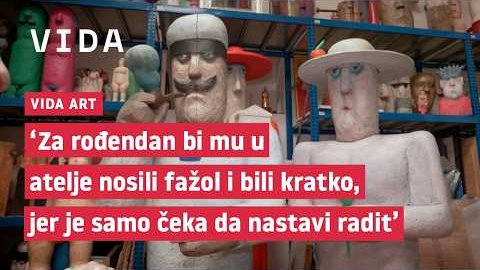
video, tv-show, interview 21.08.2026.
VIDA art - Vasko Lipovac: A World-Class Artist from Split
Video feature and reportage by journalist Branimir Zekić for VIDA art (VIDA TV, August 2026) dedicated to sculptor, painter, and printmaker Vasko Lipovac. The report explores Split’s relationship to the priceless legacy of the modern master, documents the family’s efforts to keep …
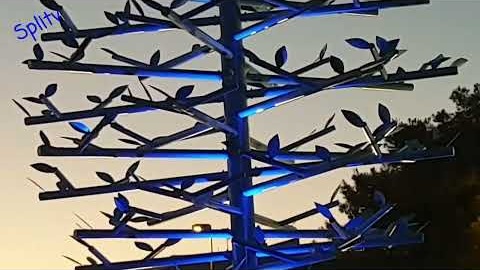
video, short-film 02.02.2022.
The Blue Tree: Vasko Lipovac in the Park by Dom Mladih in Split
Short video clip by the Split video portal Splitv capturing the presence of Vasko Lipovac’s monumental public sculpture “The Blue Tree” (Plavo stablo) in the park next to Dom Mladih and the HRT building in Split (Ulica slobode). The footage showcases the harmonious interplay …
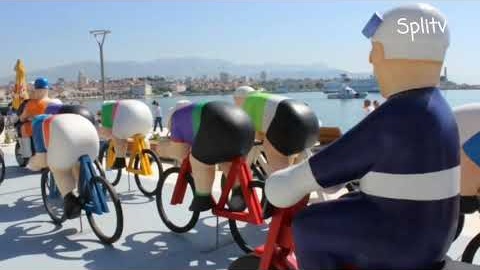
video, short-film 04.07.2021.
Cyclists by Vasko Lipovac (Splitv, In Memoriam 2006–2021)
Commemorative video feature by the Split video portal Splitv published on July 4, 2021, marking the 15th anniversary of Vasko Lipovac’s death (1931–2006). The video is dedicated to the celebrated and beloved sculpture cycle “Cyclists” (Biciklisti) installed along Split’s West …