predgovor, katalog / June 1977
FOREWORD - Solo Exhibition in Zadar
Transcript and record text
DOWNLOAD DOCUMENT
SUMMARY
Art historian and curator Antun Travirka introduces Vasko Lipovac’s solo exhibition at the City Loggia in Zadar, surveying two decades of the artist’s disciplined development and the emergence of his singular visual language. He examines the evolution of the figure-doll, reduced geometrically to cylinder, cone, and sphere, and traces its roots to the rich medieval heritage of the Bay of Kotor and memories of the artist’s native region. Travirka highlights the profound coherence of Lipovac’s artistic oeuvre, identifying play as a primary mode of human existence and an affirmation of life.
Dating note: The exhibition catalogue bears the year 1977, and contemporary press reports confirm that the exhibition at the City Loggia in Zadar opened in early June 1977. The date
1977-06-01is applied with month-level precision (date_precision: "month").
INTEGRAL TEXT
VASKO LIPOVAC
Catalogue Foreword for the Solo Exhibition at the City Loggia in Zadar
Author: Antun Travirka
Publisher: National Museum Zadar – Modern Gallery, Zadar, June 1977
Original Language: Croatian
One of the essential features of our contemporary visual art is the existence of a number of powerful individualities whose work cannot be designated simply by membership in an artistic movement, tendency, or group of like-minded creators sharing a common idea and objective. The entire brief, turbulent, and often bewildering drama of our modern art—despite pervasive fashionable epigonism and an ever-present intense desire to be en vogue at all costs—nevertheless appears to be determined by precisely these individualists, whose personal achievements, distinctive aspirations, and artistic concepts serve both as milestones and as the ultimate reach of our contemporary artistic creation.
Working devotedly, quietly, and unobtrusively, cultivating his own authentic expression and expanding his vision of the world, Vasko Lipovac has developed over the past two decades into one of the most distinctive artistic personalities of our contemporary art. Lipovac’s path in seeking his own formula of the world has been gradual and consistent, free of abrupt leaps or reversals. The idea that asserted itself at the very beginning continued to develop and clarify logically and deliberately, emerging in the artist’s full maturity as complete and simple, as pure visual art, lyrical in essence yet liberated from all narrative and anecdote.
At the center of Lipovac’s artistic creation lies a quest for the metaphor of the human figure. Very early on, he found it in a kind of modern xoanon, a puppet-figure whose form has over time been reduced and simplified to the point of facelessness, ultimately brought down to the most fundamental elements: cylinder, cone, and sphere. Upon this iconographic foundation he builds an entire system with a modest number of general signs, yet rich in an abundance of diverse combinatorial possibilities.
The source of this visual language of distinctive semantic units is easily identified in the superabundance of Boka’s medieval heritage: numerous iconostases and reliquaries, the silver pala and stone ciborium of St. Tryphon, heraldic emblems, family icons, votive paintings of sailing ships, portraits of seafarers—the whole panoply of countless figures that surrounded Lipovac’s childhood in solemn silence and gravity. It was precisely this nostalgic world of the past—devoid of pathos, steeped in quiet melancholy, resting enchanted in that wondrous bay between Vrmac and Lovćen—that constituted the first great inspiration of Lipovac’s art. In painting his innumerable melancholy captains without vessels, knights without battlefields, polyptychs composed of sailing ships, brides in white, newlyweds, and children, he told through the temporal language of symbols and metaphors a wistful tale of his native region.
Yet the genesis of the puppet-figure, present from the very beginning of Lipovac’s creative work, continues further. Gradually, it sheds the details that still lend it local specificity, becoming in time a pure symbol of humankind in general. Color has likewise been reduced to simple relationships of vivid hues of entirely pure pigment and full intensity. Although at first glance these figures radiate cheerfulness, and one might wish to view the countless variations solely as a playful game realized through the joy of combination—and while one must not overlook their occasional decorative function—nonetheless, for all their wit and frequently present gentle irony, we cannot fail to affirm that with each new work by Lipovac, the entire drama of human existence is told in full gravity, in an astonishingly beautiful and deeply human manner.
If it is true that a genuine artist spends his entire life painting essentially only a single picture, then Lipovac’s art is the finest proof of that truth. Having tested himself successfully in numerous techniques—working equally in oils, printmaking, relief, sculpture, and tapestry, shaping wood, metal, plastic, or weaving—he has conscientiously and consistently painted the very same picture: the picture of his own comprehension of the world, accepting it as it is, without gesture, outcry, or protest, positing Play alone as the mode of his existence. For, as Élie Faure observes: “…play at first glance seems the most useless of all our actions, yet it is in truth the most useful of them, and this becomes clear to us as soon as we realize that it deepens our love of life and helps us forget death.”
Antun TRAVIRKA
Biographical Note from the Catalogue
VASKO LIPOVAC was born in Kotor in 1931. He graduated from the Academy of Applied Arts in Zagreb in 1955. From 1955 to 1959, he pursued postgraduate studies at the Master Workshop of Professor Krsto Hegedušić. Since 1964, he has lived and worked in Split at Boktuljin put 26.
Transcription note: this text was transcribed from the original solo exhibition catalogue at the City Loggia in Zadar (1977). The transcription preserves the original orthography; the complete catalogue is available for download in PDF format.
Citation
Antun Travirka. „FOREWORD - Solo Exhibition in Zadar”. Katalog izložbe, Zadar, June 1977. June 1977. Vasko Lipovac — Bibliography and digital archive. VL-BIB-1977-TRAVIRKA-ZADAR. https://arhiva.vaskolipovac.hr/en/bibliografija/1977-travirka-zadar/
Related records
video, tv-emisija, izvještaj 25.09.2017.
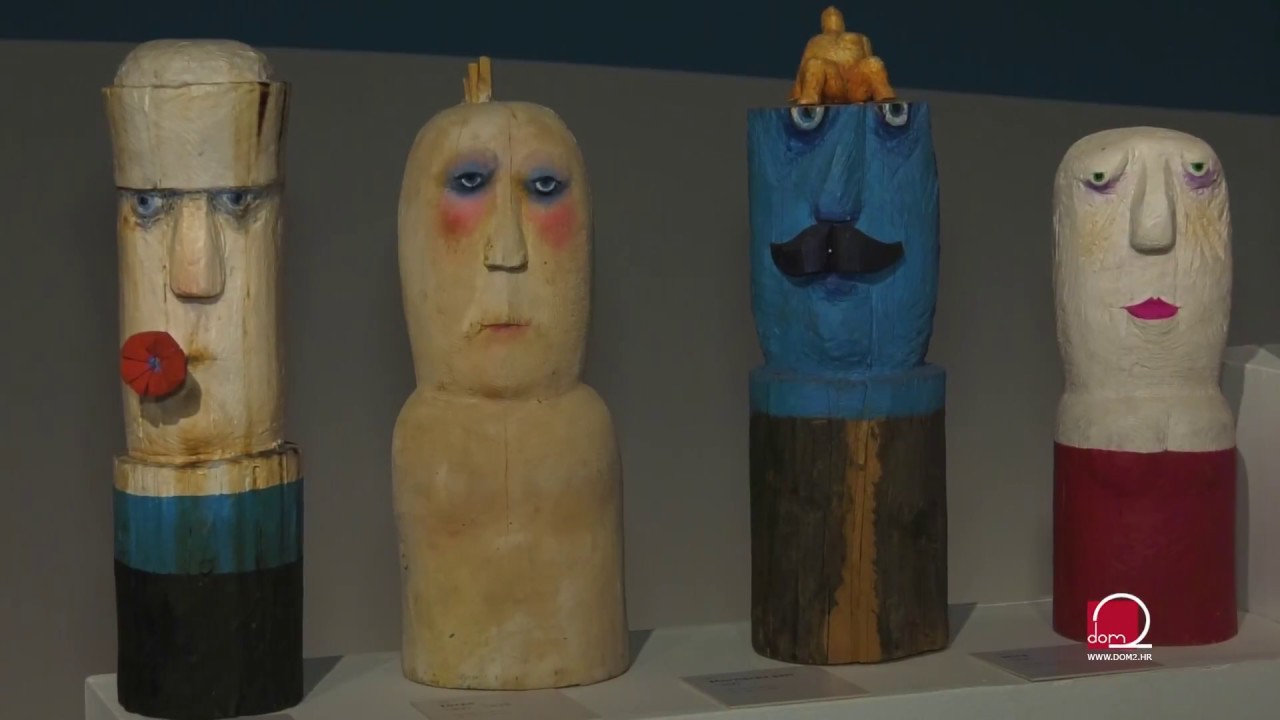
An Exhibition Worth Visiting: Vasko Lipovac Retrospective (Dom na kvadrat, 2017)
Television and video feature by the Croatian design program Dom na kvadrat, filmed at the comprehensive retrospective exhibition of Vasko Lipovac opened on September 14, 2017 at the Klovićevi dvori Gallery in Zagreb. The report offers an engaging walkthrough of the exhibition …
video, kratki-video, performans 08.12.2014.
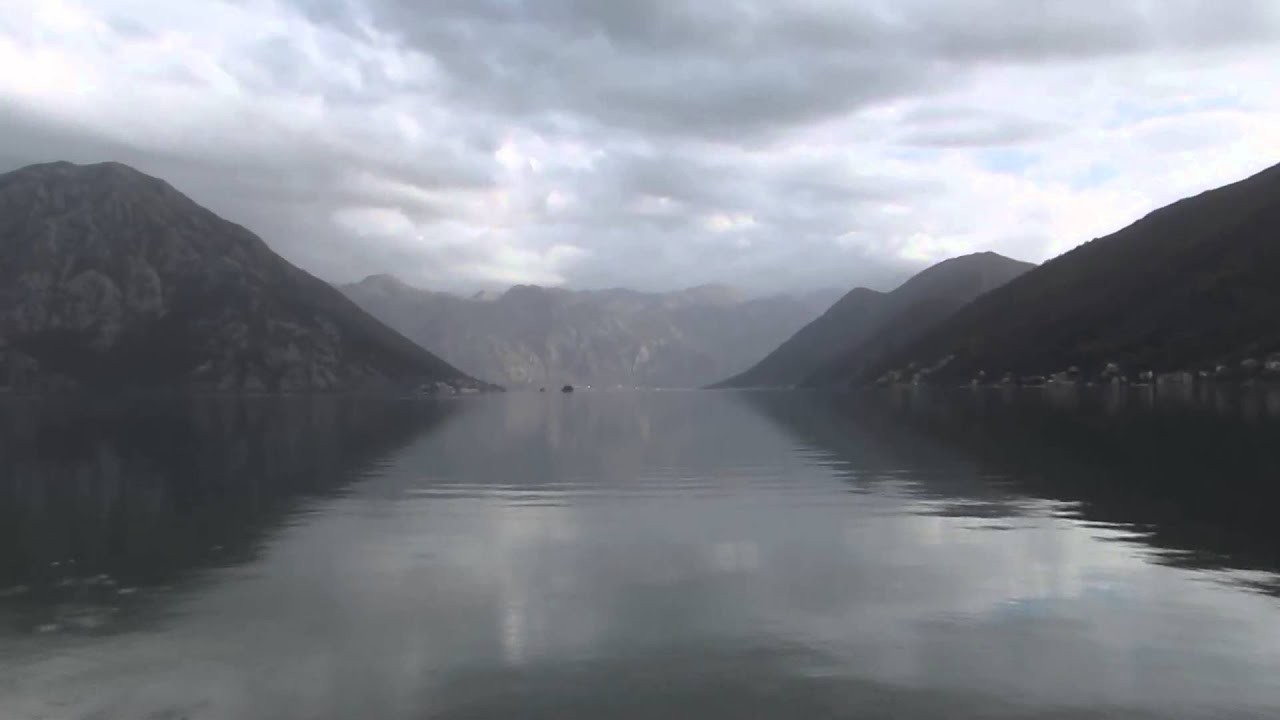
'ON THE DOOR' Bay of Kotor for Vasko Lipovac (Petar Grimani, 2014)
Short video piece and documentation of a performance by Split-based multimedia artist Petar Grimani, dedicated to Kotor and Vasko Lipovac, who was born in the town.
video, okrugli-stol, dokumentarni-film 15.07.2014.
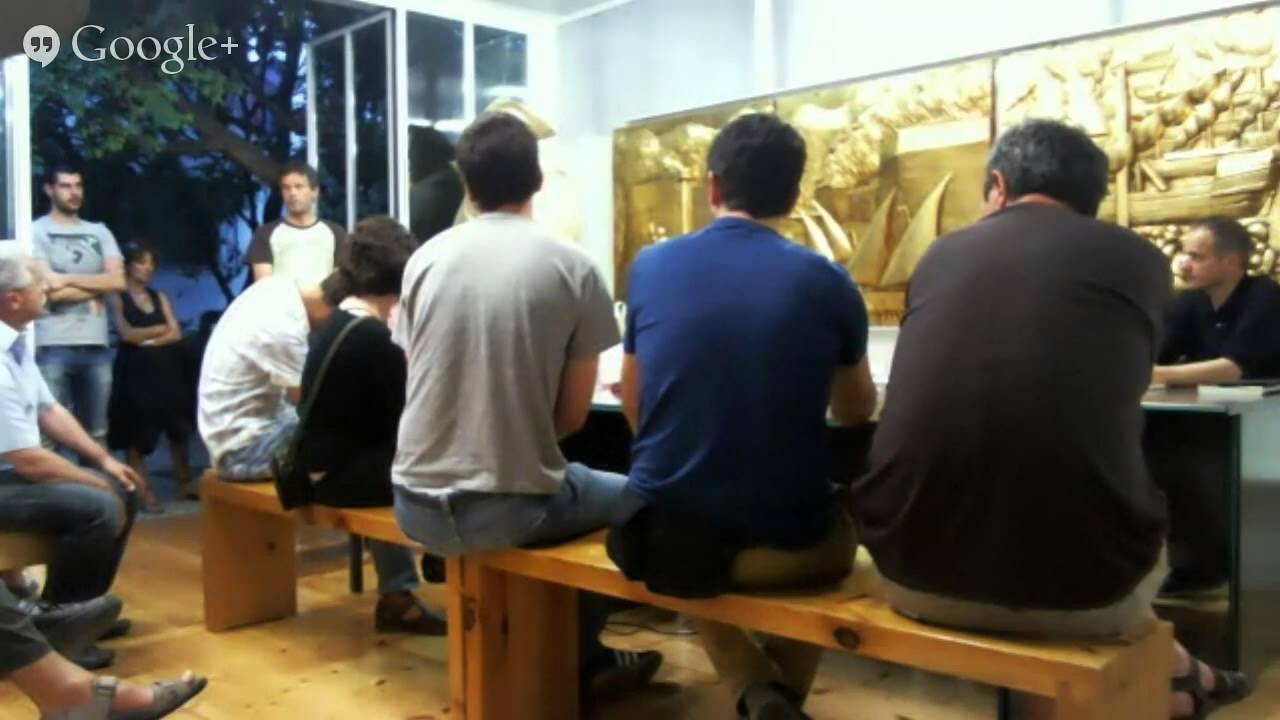
Proposals for Space – Round Table Discussion (Open Atelier Vasko Lipovac, 2014)
Complete video recording of the expert symposium and workshop titled “Proposals for Space” (Prijedlozi prostoru), held on July 15, 2014 during the Open Days of Atelier Vasko Lipovac in Split.